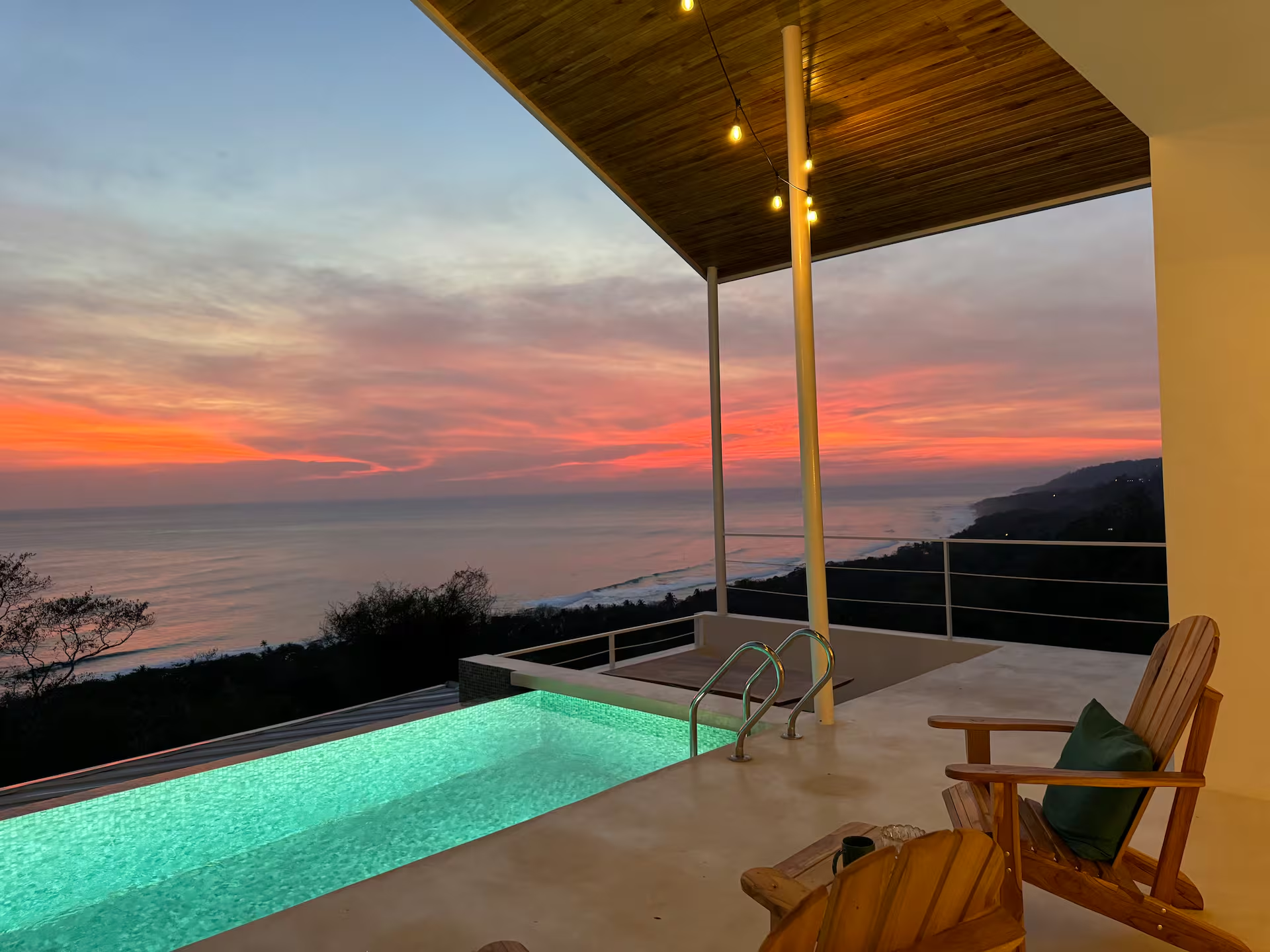
If you've come to Santa Teresa with a board under your arm — or because you want one — here's where to put it in the water. Four spots, four moods, four levels. Pick yours.
Santa Teresa is one of those places where surf isn't a hobby, it's the daily rhythm. The town wakes up to the swell forecast, lunches between two sessions, and falls asleep to the sound of the last set rolling in. Whether you're paddling out for the first time or you've been chasing waves your whole life, you'll find your spot here — and a place to sleep that doesn't feel like a tourist box. Check out Nouli, our minimalist sanctuary, or any of our three villas for the full experience.
Playa Carmen — the all-rounder
Right at the heart of town, Playa Carmen is where most surfers go first. Soft, sandy bottom. A gentle slope. Mellow when the swell drops, more serious when it picks up. Surf schools line up here every morning, so you'll share the water with beginners laughing through their pop-ups — and with a few intermediates carving the outside when the lines get long.
Best window: rising tide, late afternoon, offshore wind from the east.
Skip it: low tide at noon — the sand bar shifts and the waves get short and choppy.

Playa Hermosa — the reward
Ten minutes north by car, Playa Hermosa is a long, open beach that the offshore wind grooms perfectly. The swell arrives cleaner, the lines run longer, and the peaks are easier to read. You'll need to have caught a few waves before you tackle this one — call it intermediate territory.
Locals come here at dawn, before the sea breeze kicks in. By 9 AM the wind starts turning and the wave loses some of its shape. So, set the alarm, drive up with a coffee, paddle out at sunrise. It's worth every yawn.
Best window: first light, mid to high tide, light offshore.
Suck Rock — the technical one
This one's for the experienced. A hollow, fast wave breaking over a shallow rock formation just offshore from Mal Pais. Limited takeoff zone, plenty of locals, and a swell-reading curve that takes two or three sessions to crack. We rarely paddle out here without a guide, and we never send a guest there without a clear warning.
It's beautiful. It's serious. It's not a place to learn.
The sea in Santa Teresa isn't one wave — it's four. Each spot has its own temperament.
Playa Los Cedros — the secret one
A bit further north, accessible by a dirt path through the jungle. Few people, even in high season. The wave is more irregular but sometimes magnificent — especially around spring tides when the swell wraps just right. You go for the walk as much as for the session, and you might come back with a fish under your arm if you cross paths with one of the local fishermen on the way out.
If you want quiet, this is your beach.

Schools, coaches, and rentals — what we book for our guests
If you're staying in one of our houses — say at Casa Noa or Les Roches — and want a lesson, a private coach, a board delivered to your door, or a sunset photo session in the water, just message us. We work with three trusted surf schools, a local shaper we particularly love, and a couple of in-water photographers who blend in without disturbing your line-up.
One message, and everything is set up for your first wave.
The truth about season and swell
People ask us when the surf is best in Santa Teresa, and the honest answer is: it depends what you're looking for. December to April is dry season — sunny, consistent offshore winds, smaller and cleaner waves. Great for beginners and intermediates. May to November is rainy season — bigger swell, more punch, but also more variable. Pros come for those months. Either way, the water is warm year-round (around 27°C), and the sun sets at 6 PM with surgical regularity.
The truth is, there's no bad month to surf in Santa Teresa. There's only the question of which version of the sea you want.